Beading Pattern Grid (Free Printable PDF)
Bead graph paper with the cells offset the way the stitch really works, plus a colour key so your chart says which bead each shade means.
Free · no watermark · no sign-up for your first 20 downloads a day
Fillable PDF — type into the fields online or in any PDF viewer before printing.
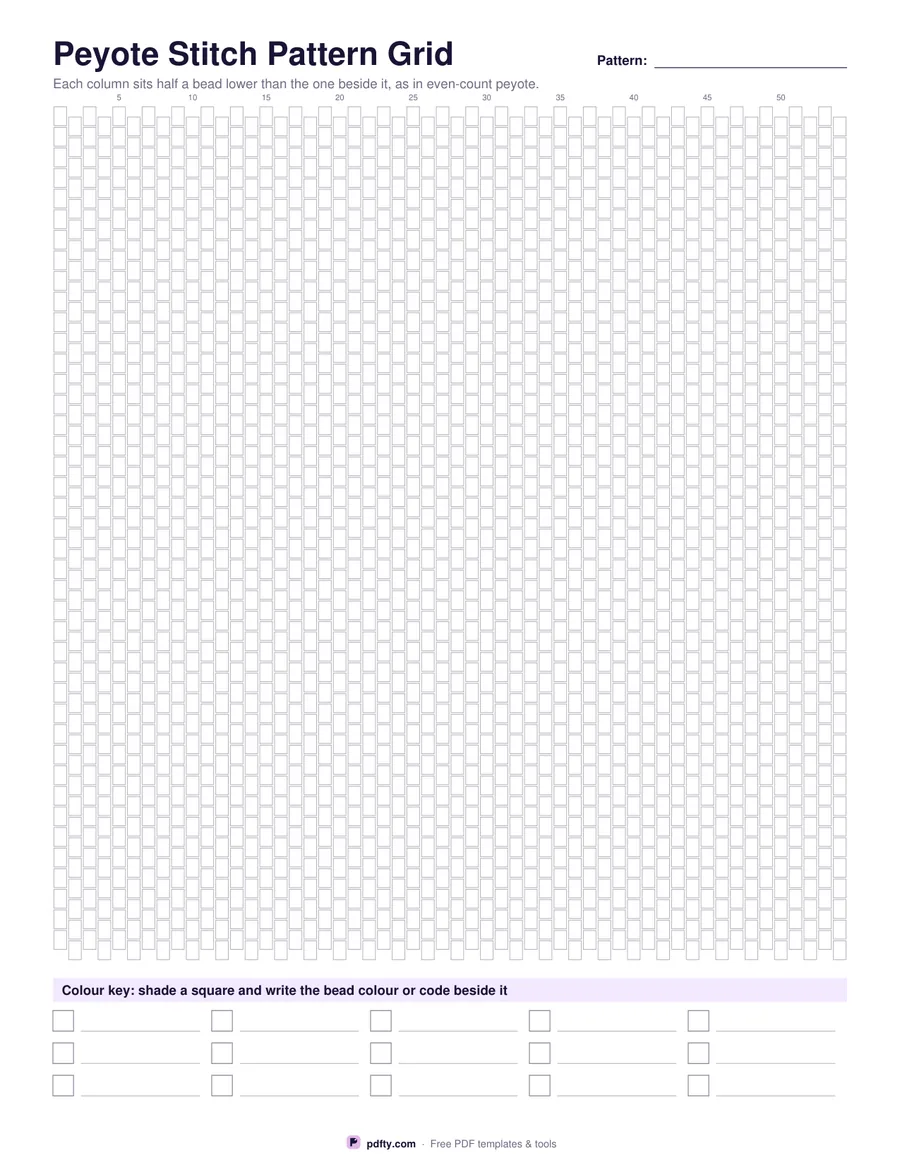
Ordinary square graph paper lies to you about beadwork: beads are not square and they do not sit directly above each other. This sheet draws the cells the way the stitch sits. The peyote grid is made of upright bead cells in columns, with every other column dropped half a bead, which is what even-count peyote does. The brick grid is made of lying-down bead cells in rows, with every other row shifted half a bead across, like courses of brickwork.
The grid fills the page, roughly fifty columns by forty rows for peyote and sixty-five rows for brick, with a small number every five columns or rows so you can count repeats and find your place in a long pattern. There is a line at the top to name the pattern. Colour the cells with pencils, then follow the chart bead by bead; the offset means the chart looks like the finished piece rather than a square approximation of it.
Along the bottom, fifteen key squares each have a line beside them. Shade a square in the pencil you used on the grid and write the bead colour, the manufacturer's code or the finish next to it, so a pattern you come back to in a year can still be beaded from the same tubes. The key lines are form fields if you prefer to type the bead codes; the grid itself is for colouring by hand.