Sewing Pattern Notes (Free Printable PDF)

A record of one make: the pattern number and size you cut, the fabric and yardage you bought, your measurements against the pattern's, and every alteration you made.
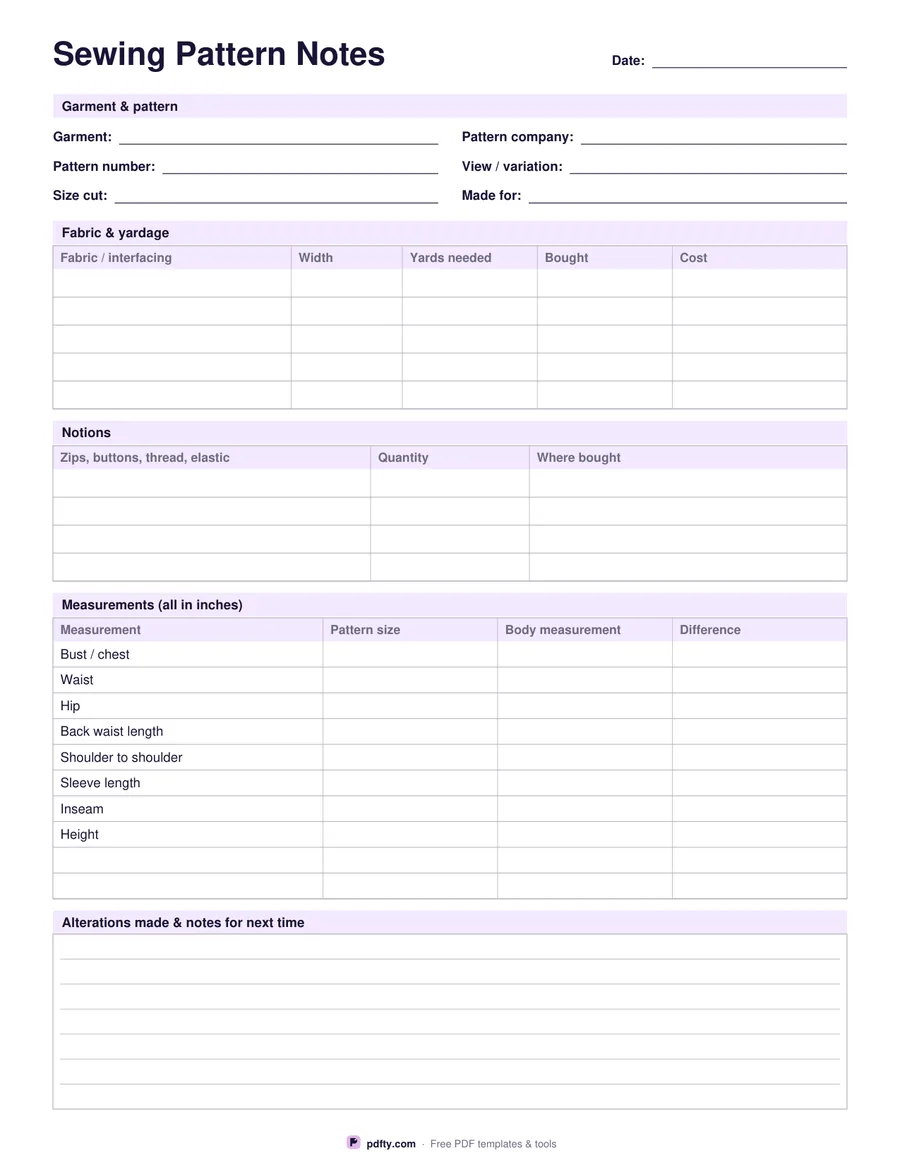
Printable sewing pattern notes sheet with fabric, notions and measurement tables
Units
Paper size
Fill & edit free online

Free · no watermark · no sign-up for your first 20 downloads a day

Fillable PDF — type into the fields online or in any PDF viewer before printing.

The first block records the garment, the pattern company, the pattern number, the view or variation, the size you cut and who it is for. These six lines are the ones you want six months later when the pattern worked and you cannot remember which size you traced. The fabric table below takes five fabrics or interfacings with width, yardage or metres needed, where you bought it and the cost, so the page doubles as a record of what the make cost.

The notions table has four rows for zips, buttons, thread, elastic and anything else, with quantity and where it came from. The measurement table lists bust or chest, waist, hip, back waist length, shoulder to shoulder, sleeve length, inseam and height, plus two blank rows, each with a column for the pattern's measurement, your own and the difference. That difference column is what tells you whether to grade between sizes before you cut.

The bottom third of the page is a ruled block headed alterations made and notes for next time: the full bust adjustment, the two inches you took off the length, the seam you would finish differently. Choose inches or centimetres and the measurement and yardage headings change to match. Every box is a form field, so you can type the details and keep the sheet in the pattern envelope or as a file.
How to use it

  1. 1

    Choose your units

    Inches and yards, or centimetres and metres; the fabric and measurement headings follow your choice.

  2. 2

    Record the pattern and fabric

    Fill in the pattern number, the size you cut and the fabric you bought before you start sewing.

  3. 3

    Print or fill it in

    Print at 100% ("Actual size") so lines and boxes keep their exact spacing, or fill the form fields on screen in any PDF viewer.

  4. 4

    Write the alterations down as you make them

    Note each adjustment while it is fresh, so the next version of the same pattern starts from what you already learned.

Frequently asked questions

Yes. There is no watermark and no sign-up for your first 20 downloads each day; after that a free account keeps downloads going. You may print the file as often as you like for personal, school or business use.
Yes. Every box and line on the sheet is a PDF form field, so you can fill it in Adobe Reader, Preview, Chrome or Edge and print a tidy copy, or print it blank and write by hand.
Five fabric or interfacing rows and four notions rows, with quantity, supplier and cost columns.
Bust or chest, waist, hip, back waist length, shoulder to shoulder, sleeve length, inseam and height, plus two blank rows for anything else.
It is written for garment sewing, but the fabric, notions and alterations blocks suit any project where you buy material and change the instructions.
Yes. Open the PDF in an annotation app such as GoodNotes, Notability or Xodo and write on it with a stylus, or fill the form fields and keep the file with your other project notes.

More free templates

Work with your PDF